The Bathroom Sink Buying Guide
Understanding the importance of selecting the right bathroom sink is crucial for optimizing your daily routines. This comprehensive guide aims to enlighten you on the diverse array of bathroom sinks available and their distinct advantages.

Given that the bathroom is a central hub of daily activity in any household, its design warrants careful consideration. From the moment we awaken to the time we retire for the night, the bathroom serves as a pivotal space where functionality meets comfort. Whether it's for personal grooming or refreshing moments, the bathroom must seamlessly accommodate the needs of every family member. Designers play a pivotal role in ensuring that the bathroom's layout strikes the perfect balance between practicality and aesthetic appeal.
At the heart of every well-equipped bathroom lies the indispensable bathroom sink. Serving as both a functional necessity and a design statement, the sink completes the ensemble of any lavatory. With an extensive array of styles and materials to choose from, selecting the ideal sink entails a thoughtful assessment of your space's requirements. Our goal is to guide you through the myriad options available, empowering you to make an informed decision that aligns perfectly with your bathroom or powder room's unique ambiance and layout.
1. Wall-mounted sink :
 |
| Image Credit : Tapron.co.uk |
This wall-mounted sink boasts a basin that gracefully suspends from the wall, offering customizable height and positioning tailored to your preferences. Renowned for its versatility and aesthetic appeal, this sink style enjoys widespread popularity among discerning homeowners. Notably, its adaptable design makes it well-suited for universal access applications, ensuring inclusivity without compromising on elegance.
Characterized by its sleek and minimalist silhouette, this sink exudes contemporary charm, elevating the ambiance of any bathroom space. Its seamless integration with the wall conceals plumbing fixtures within, resulting in a clean and uncluttered aesthetic that enhances the overall visual appeal of the room.

Image Credit : Tapron.co.uk
Advantage - Opting for this sink style offers a space-saving solution, effectively creating an illusion of spaciousness within your bathroom by eliminating the need for cabinets beneath.
Disadvantage - However, the absence of storage space underneath may pose a drawback, requiring additional storage solutions to be incorporated. Furthermore, lacking a countertop means there is no designated landing space, which may not be ideal for bathrooms with specific storage needs or countertop functionalities.
2. Sinks that are either undermount or
undercounter :
It offer a modern, sleek, and distinctive aesthetic. Positioned beneath the countertop, these sinks provide usable counter space while maintaining a clean and uncluttered appearance. Particularly suitable for high-traffic bathrooms, such as those used by families, this sink style offers several advantages and drawbacks.
Advantage - One notable advantage of this sink type is its ease of cleaning. Spills and splashes can be effortlessly wiped directly from the countertop into the sink, simplifying maintenance and upkeep. Additionally, the seamless integration of the sink beneath the counter creates a visually appealing and cohesive look, with the sink basin itself remaining discreetly hidden.
Drawback - However, it's essential to consider that undermount sinks are compatible primarily with solid-surface countertops, such as stone. They may not be well-suited for use with wood or laminate countertops due to a lack of moisture protection, limiting their versatility in terms of countertop materials. Additionally, undermount sinks typically come at a higher price point compared to top-mount sinks, potentially impacting budget considerations for bathroom renovations or installations.
3. Pedestal sink :
 |
| Image Credit : Tapron.co.uk |
A pedestal sink offers an excellent solution for those seeking a space-saving option with minimal storage requirements. Characterized by its stylish, sophisticated, and sleek design, the pedestal sink lends a sense of elegance to any bathroom space while creating an illusion of expansiveness. Available in various styles and shapes, these sinks add a decorative element to the room's aesthetic, enhancing its overall appeal. It's worth noting that the waste pipe must be permanently attached to a pedestal sink, ensuring proper functionality and stability.
Advantage - One significant advantage of a pedestal sink is its ability to conceal pipework, contributing to a visually pleasing and uncluttered bathroom environment. The streamlined appearance of the sink adds to the overall sophistication of the space, making it an attractive option for modern interiors.
Drawback - However, it's essential to consider that pedestal sinks lack storage space underneath, which may pose a challenge for those with organizational needs. Additionally, the gap between the sink and the wall can make cleaning difficult, requiring extra effort to maintain cleanliness and hygiene in the bathroom.
4. Vessel sinks :
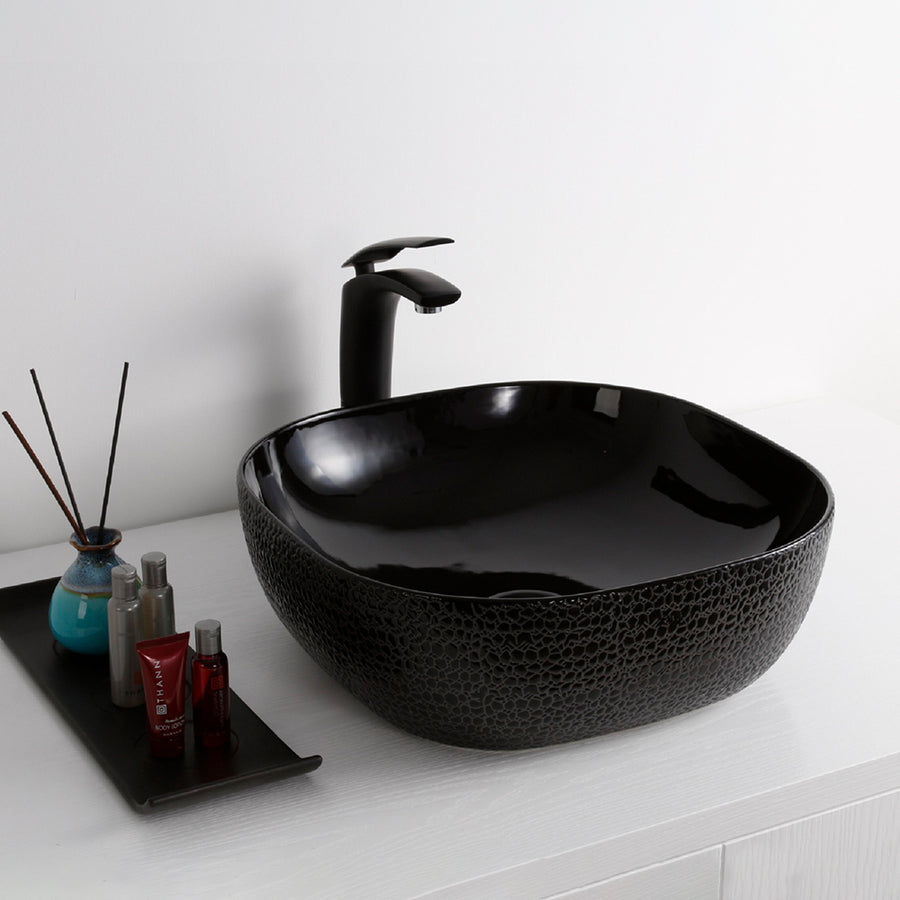
Vessel sinks typically boast a bowl-shaped design and are placed atop the bathroom counter, offering a distinctive and eye-catching appearance. Unlike undermount sinks, they do not require installation beneath the counter, though some models may sit partially below the surface. Generally, vessel sinks necessitate the use of a pop-up drain and are positioned higher than traditional sinks.
Advantage - Vessel sinks serve as striking focal points in the bathroom, making a bold design statement that enhances the overall aesthetic appeal of the space. Their deep bowl design is particularly advantageous as it allows for ample water capacity, making them ideal for various washing tasks.
Disadvantage - However, due to their elevated height, careful consideration is required when planning the counter height to ensure optimal functionality and user comfort. Additionally, the elevated position of vessel sinks may pose challenges in terms of cleaning, as reaching around the base and back of the sink can be cumbersome and may require extra effort to maintain cleanliness effectively.
5. Top-mount sinks :
 |
| Image Credit : Tapron.co.uk |
This type of sink, known as a self-rimming or drop-in sink, is a popular choice and is designed to sit atop the bathroom counter. Its distinctive feature is the visible rim that extends above the counter surface, and the sink's overall style dictates the size and shape of this rim.
Advantage - One of the main advantages of this sink style is its versatility in terms of countertop compatibility. It can be used with various countertop materials, including wood or laminate, as it effectively covers the cutout and helps prevent water damage. Additionally, self-rimming sinks are relatively easy to install and are available at affordable price points.
Disadvantage - However, due to the elevated rim, there is a risk of water spilling from the sink onto the surrounding counter surface, especially if the sink is overfilled or water is splashed during use. This may necessitate extra care to prevent water damage to the countertop.
6. Semi recessed sinks :
Semi-recessed sinks are a practical solution for small bathrooms with limited storage capacity. These sinks are positioned partially above the countertop, offering storage space within shallower cabinets underneath.
Advantage - One of the key benefits of semi-recessed sinks is their ability to maximize floor space while still providing ample countertop area. Additionally, the sink's placement allows users to reach the faucet more easily from a closer distance, enhancing convenience during use.
Disadvantage - Despite their space-saving design, semi-recessed sinks offer limited storage capacity compared to other sink types. Furthermore, since there is no countertop directly surrounding the sink, there may be an increased risk of water spillage onto the floor or surrounding surfaces, requiring extra care and maintenance.

Image Credit : Goldbathroom.uk
If you're interested in learning more about different bathroom fixtures and accessories, including bath wastes, you might find thus blog https://goldbathroom.uk/blogs/news/bath-wastes-guide useful. It provides comprehensive information on choosing the right bath wastes for your bathroom. Feel free to check it out!
7. Corner sink :

A corner sink serves as an ideal solution for maximizing space utilization in small bathrooms, particularly in cramped corners. These sinks come in both wall-mount and pedestal variations.
Advantage - The primary advantage of corner sinks lies in their compact design, which allows them to snugly fit into corners, making efficient use of otherwise unused space.
Disadvantage - Despite their space-saving benefits, corner sinks may pose usability challenges for some individuals due to their location in the corner, which can make access and use more difficult compared to sinks positioned along a wall or in the center of the room.
8. Integral sinks :
The sink, also referred to as an "all-in-one sink" or "countertop sink," is constructed as a single unit that integrates seamlessly with the countertop. It can be crafted from various materials such as acrylic or porcelain.
Advantage: The primary advantage of this sink lies in its easy maintenance, as it lacks seams or ridges that can harbor dirt and grime. Additionally, it offers versatility in size options, including the possibility of customizing the sink to perfectly fit your space.
Drawback: However, one drawback of all-in-one sinks is that their design features a gradual slope inward toward the center to form the sink basin, which may reduce available counter space. Furthermore, replacing the sink would require replacing the entire countertop, limiting creative matching options between sink and counter materials.
With a better understanding of the different types of bathroom sinks, selecting the right one for your needs should now be easier. It's crucial to choose a sink that not only fits comfortably within your bathroom space but also caters to the needs of your household. Consider factors such as bathroom size, budget, and functional requirements when making your decision. We trust that this article has provided valuable insights to assist you in your sink selection process. Stay tuned for more helpful tips!
9. Console Sinks :
The console sink design represents a fusion of wall-mounted and pedestal sink styles. With its exposed base, this option proves to be a practical solution for smaller bathroom spaces. It can either be wall-hung or supported by two to four legs, offering versatility in installation. Additionally, some console sinks may feature open shelving beneath the basin or counter.
Advantage: One notable advantage of the console sink is its ability to optimize space utilization while providing compact storage options. Its wider design allows for more room to accommodate toiletries and other bathroom essentials, contributing to a stylish and organized bathroom aesthetic.
Drawback: However, a potential drawback of the console sink is its limited storage capacity, which may not be sufficient for storing bulkier items. Additionally, the exposed plumbing associated with this style could detract from the overall cleanliness and visual appeal of the bathroom, creating a cluttered appearance. Moreover, in smaller bathrooms, the increased width of the console sink may inadvertently accentuate the space, potentially overwhelming the room's proportions.
10. Wash plane sinks :
Wash plane sinks are a popular choice in restaurants and hotels due to their sleek, stylish, and slim design. These sinks typically feature a small stainless steel trough positioned beneath them to catch water runoff.
Advantage: One of the main advantages of washplane sinks is their space-saving design. They occupy minimal space and are available in a variety of materials, including ceramic, porcelain, and glass. Additionally, for those requiring custom-made options, washplane sinks can also be crafted from materials such as granite, marble, or engineered stone, offering flexibility to suit different preferences and design aesthetics.
Disadvantage: However, washplane sinks are best suited for areas where they are primarily used for handwashing purposes. Their shallow basin design means they have limited water-holding capacity, making them less suitable for tasks that require a larger volume of water.

Image Credit : Goldbathroom.uk
For those interested in enhancing their bathroom further, understanding other essential fixtures like radiators is crucial. You might find blog : https://goldbathroom.uk/blogs/news/radiator-material-steel-iron-aluminum-gold-bathroom-uk helpful in selecting the perfect radiator for your bathroom. Take a look if you want to explore more options to optimize your bathroom space!
Comments
Post a Comment